Korea's Rainy Season & Summer: Words for 장마, 삼계탕, and Beating the Heat
Late June means 장마 — Korea's monsoon season — is arriving, followed by a sweltering summer. Here are the Korean words and cultural customs you'll need, from rainy-day vocabulary to the soup Koreans eat to fight the heat.
Published:
Written by Alvin Lim Certified Korean Language Teacher (Level 2)
It’s mid-June, which in Korea means 장마 — the summer monsoon — is on its way, with weeks of heavy, humid rain followed by some of the hottest days of the year. This is the season that comes with its own vocabulary and its own customs, so here’s the Korean you’ll want, from rainy-day basics to the soup Koreans famously eat to fight the heat.
Rainy-season vocabulary
When 장마 hits, these words move into daily conversation overnight.
A useful pairing: 비가 와요 means “it’s raining,” and during 장마 you’ll hear 장마철 (the rainy-season period) constantly in weather reports.
Beating the summer heat
Once 장마 lifts, the real heat arrives — and so does some of Korea’s most distinctive food culture.
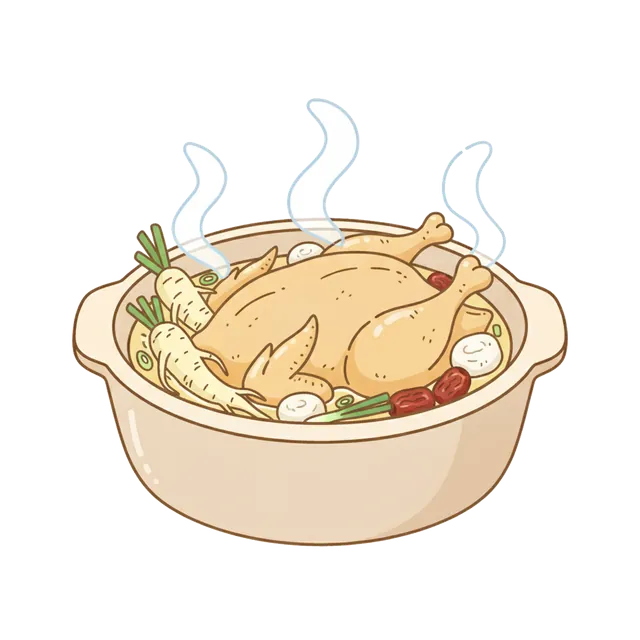
The custom worth knowing is 이열치열 (fight heat with heat): on the three hottest days, called 삼복, many Koreans eat a steaming bowl of 삼계탕 rather than something cold, believing the hot, nourishing soup rebuilds the energy that summer drains away.
One grammar trap to avoid
When you talk about all this heat, remember that Korean splits “hot” into two words. 덥다 is for weather and how it feels — 날씨가 더워요 (the weather is hot). 뜨겁다 is for things you could touch — 국이 뜨거워요 (the soup is hot). So the summer is 덥고 (hot), and the 삼계탕 you eat to beat it is 뜨겁다 (hot to the touch). Keep those two apart and your summer small talk will sound completely natural.
Frequently asked questions
When is the rainy season (장마) in Korea?
장마, Korea's summer monsoon, usually arrives in late June and lasts into late July, though the exact timing shifts each year and is announced by the weather service. During this stretch you get long spells of heavy, humid rain, so an umbrella (우산) becomes a daily essential.
After 장마 ends, Korea moves into its hottest, most humid weeks of the year — which is where the heat-beating food customs come in.
Why do Koreans eat hot soup in the hottest part of summer?
It comes from the idea of 이열치열 (以熱治熱) — 'fight heat with heat. ' On the three hottest days of summer, called 삼복 (초복, 중복, 말복), many Koreans eat 삼계탕, a hot ginseng-and-chicken soup believed to restore stamina drained by the heat.
The logic is that a hot, nourishing meal helps your body cope rather than shocking it with something cold. It's one of the most distinctive food customs in the Korean calendar.
What's the difference between 덥다 and 뜨겁다?
Both translate as 'hot,' but they're not interchangeable. 덥다 describes the weather or how you feel in it — 날씨가 더워요 (the weather is hot).
뜨겁다 describes a hot object or liquid you could touch — 국이 뜨거워요 (the soup is hot). So summer weather is always 덥다, while the 삼계탕 you eat to survive it is 뜨겁다.
Mixing them up is one of the most common beginner slips.