Liberation Day Korea (광복절): The Words You'll See and Hear on August 15
August 15 is Gwangbokjeol (광복절), Korea's Liberation Day — a national holiday marking the 1945 restoration of independence. Here's what the day is and the Korean words around it, from 태극기 (the national flag) to 게양하다 (to raise a flag).
Published:
Written by Alvin Lim Certified Korean Language Teacher (Level 2)
August 15 is 광복절 (Gwangbokjeol), Korea’s Liberation Day — a national holiday that marks the 1945 restoration of Korea’s independence. It’s a public day off, and if you’re in Korea you’ll notice national flags going up across the city. This guide walks through what the holiday is and the Korean words you’ll see in headlines, hear at ceremonies, and spot on apartment balconies that day.
What kind of holiday is it?
Gwangbokjeol is one of Korea’s official national holidays. Two words tell you its status, and they’re worth knowing because you’ll see them on any Korean calendar.
A quick note on the difference: a 국경일 is a nationally significant day by law, while a 공휴일 simply means offices and schools are closed. Gwangbokjeol is both, which is why people get the day off.
The flag words
The most visible part of the day is the flag. If you learn just a few words here, you’ll understand most of what’s happening on the street.
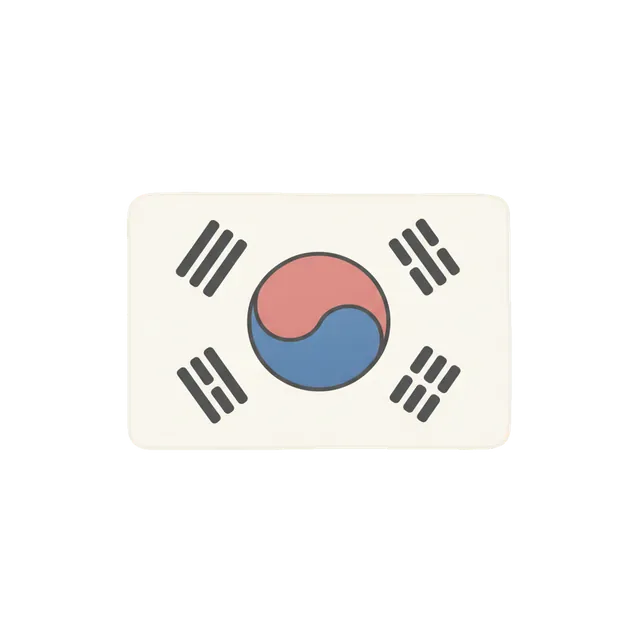
The flag itself is the 태극기, named after the red-and-blue 태극 circle at its center.
On Gwangbokjeol you’ll see it on flagpoles, storefronts, and apartment balconies — that’s 게양하다 in action, 태극기를 게양해요 (we raise the flag).
At ceremonies you may hear 만세, a cheer, and references to 순국선열 in more formal speeches.
A usage note, and where to go next
One handy grammar point: 게양하다 is a 하다 (ha-da) verb, so it conjugates like most 하다 verbs — 게양해요 (raise, polite present), 게양했어요 (raised).
You’ll meet this pattern constantly in Korean, since a huge share of two-syllable-plus-하다 words work the same way.
The holiday vocabulary here — 국경일, 공휴일, 기념식 — also carries over to other commemorative days on the calendar, so it’s useful well beyond August.
If you’d like the bigger picture of Korea’s celebration calendar, see our guide to Korean traditional holidays.
For more modern-history words in the same neutral, factual register, the vocabulary in talking about Korea’s democratization pairs well with this set.
And to place the day in context, our country and nationality words cover how to say Korea (한국), Korean people (한국인), and related terms you’ll want alongside 광복절.
Frequently asked questions
What is Gwangbokjeol (광복절) and when is it?
Gwangbokjeol (gwang-bok-jeol) is Korea's Liberation Day, held every year on August 15. The name combines 광복 (gwang-bok, 'restoration of light,' meaning regained independence) and 절 (jeol, 'day/festival').
It marks the 1945 restoration of Korea's independence, and it is a 국경일 (guk-gyeong-il, national holiday) as well as a 공휴일 (gong-hyu-il, public day off). So August 15 is both a day of remembrance and a day when offices and schools are closed.
Why do you see so many Korean flags on August 15?
On Gwangbokjeol many households and buildings display the 태극기 (tae-geuk-gi), the national flag of Korea. The verb for putting it up is 게양하다 (ge-yang-ha-da, to raise/hoist a flag), and you'll hear the phrase 태극기를 게양해요 (we raise the national flag).
Public buildings hold a 기념식 (gi-nyeom-sik, commemorative ceremony) to mark the day. Seeing rows of 태극기 along streets and apartment balconies is one of the most visible signs of the holiday.
What does 만세 (manse) mean?
만세 (man-se) literally means 'ten thousand years' and is used as a cheer, similar to 'hurray. ' It is strongly associated with Korean history and with Liberation Day.
You may also see the word 순국선열 (sun-guk-seon-yeol), meaning patriotic martyrs — people honored for their sacrifice — which comes up at ceremonies on this day. 순국선열 in particular is formal and mostly appears in speeches, headlines, and school events rather than casual conversation.