Jjimjilbang 101: Korean Sauna Words and Etiquette for First-Timers
A jjimjilbang is more than a Korean sauna — think bathhouse, heated rooms, and an overnight lounge in one building. Here's the vocabulary and etiquette for your first visit, from 사우나 to the famous 양머리 (yang-meo-ri) towel hat.
Published:
Written by Alvin Lim Certified Korean Language Teacher (Level 2)
A jjimjilbang (찜질방) is one of Korea’s most distinct public spaces — part Korean sauna, part bathhouse, part all-night living room where entire families show up with a change of clothes and settle in for hours.
Summer heat sends plenty of locals in search of a cool room and a cold 식혜, but a first visit can feel confusing if you don’t know the vocabulary or the unspoken rules.
Between the shoe lockers at the entrance, the uniform you change into, and the different rooms inside, there’s a small system to learn before you can relax.
What’s the difference: 찜질방, 사우나, and 목욕탕?
These three words get used almost interchangeably by beginners, but each one means something specific.
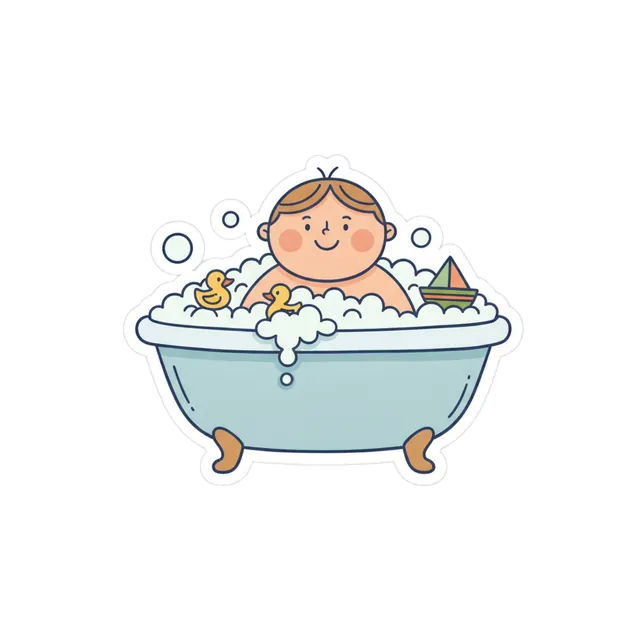
The short version: 목욕탕 is just for washing, 사우나 is one hot room, and 찜질방 is the whole building — baths, several heated rooms including the extra-hot 불가마, a snack area, and the 수면실 where you can nap or stay overnight. Most jjimjilbang charge one entry fee that covers all of it, so once you’re inside, the biggest decision left is simply which room to try first.
What to expect: bathing, the towel hat, and snacks
The bathing area (the 목욕탕 section) is clothing-free and gender-separated — everyone washes first, then soaks. At check-in, staff usually hand you a matching T-shirt and shorts along with a locker key; that uniform is what you change into after bathing, and it’s what everyone wears in the common heated rooms outside the bath, which are mixed and much more relaxed.
The 양머리 towel hat is a lighthearted tradition almost everyone tries at least once, and 때밀이 — an intense full-body scrub, often done by a professional right in the bath area — is famous with visitors for being surprisingly rough the first time.
Once you’re showered, dressed in the uniform, and out in the common rooms, 식혜 and 맥반석 계란 are the standard between-sauna snack.
Beyond the snack counter, most common areas also have a TV room and a warm floor for stretching out and napping, so a single visit can easily stretch into an entire afternoon.
Etiquette basics before you go
A few habits will save you from an awkward first visit.
Take your shoes off and store them in the locker right at the entrance — you’ll get one key for your shoes and a second one for your clothes and belongings.
Shower completely before entering any shared bath or hot tub — this is non-negotiable and closely watched.
Keep your voice down in the 수면실, since people are actually trying to sleep there.
And the extra-hot 불가마 rooms are meant for short stretches, not the whole visit — step out and cool down between rounds.
Beyond the bathing rules, a jjimjilbang is still a shared space, so the same courtesy that applies to any public place in Korean — quiet voices, no cutting in line for the shower — applies here too.
If body-part vocabulary from the Korean body parts guide sounds useful before a 때밀이 session, it’s worth a quick look, since the scrubber will often ask which part to focus on.
And since a jjimjilbang trip is really a small health and fitness ritual for a lot of Koreans — sweating out a stressful week — treat it less like a tourist stop and more like joining a local routine.
Frequently asked questions
What is a jjimjilbang and how is it different from a regular sauna?
A jjimjilbang (찜질방) is a Korean bathhouse-plus-sauna complex: gender-separated bathing areas (목욕탕, mo-gyok-tang) plus shared heated rooms, a snack corner, and often a sleeping room (수면실, su-myeon-sil) you can stay in overnight. A 사우나 (sa-u-na) usually just means a single hot room, and a 목욕탕 on its own is a bathhouse for washing only, without the heated common rooms or the option to sleep there.
What is the sheep-head towel I keep seeing in jjimjilbang photos?
That's 양머리 (yang-meo-ri, literally 'sheep head'), a small towel twisted and folded into two loops on top of the head. Everyone in the common heated rooms wears the same T-shirt-and-shorts uniform, so the towel hat is really just a fun, low-effort styling trick that has become a photo-op tradition — not a strict rule.
What snacks are jjimjilbang famous for?
The two classics are 식혜 (sik-hye), a sweet, mild rice punch served ice-cold, and 맥반석 계란 (maek-ban-seok gye-ran), eggs slow-baked on hot maifan stones until the shells turn brown and the inside gets a slightly chewy, smoky texture. Both are sold right at the snack counter and are meant to be eaten while sitting in the common room between sauna rounds.